Vegetarian sushi is any roll or plate built without fish — avocado and cucumber rolls at $5.99, edamame and seaweed salad at $4.99 each. The catch is dashi, a stock made from bonito flakes that hides in miso soup and many sauces. Vegetable ramen is $10.99.
Sushi has a reputation as fish-only food, but Japanese cooking is more welcoming to vegetarians and vegans than it first appears — with one catch worth knowing about. If you're looking for vegetarian sushi in Carrollton, here are the meat-free options you'll commonly find, the one ingredient that trips people up, and the simple questions that make ordering easy.
Maki built around vegetables — cucumber, avocado, pickled radish, asparagus — instead of fish. Simple, fresh, and the most direct way to enjoy sushi without seafood.
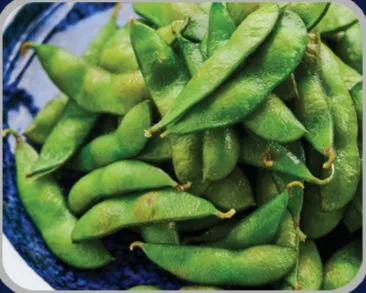
Steamed young soybeans, usually finished with a little salt. A reliable, naturally plant-based starter found at almost every Japanese kitchen.
Tofu shows up fried, simmered, and chilled. A crisp, silky block of age dashi tofu is a favorite — just note the broth question below if you're strict.
A vegetable-forward ramen or a vegetable rice bowl can make a satisfying main, swapping the meat for seasonal produce — again, worth asking how the broth is made.
Here's the catch. Many Japanese dishes are built on dashi, a foundational stock — and traditional dashi is made with bonito (dried, smoked fish) along with kombu seaweed. That means a soup or a "vegetable" broth can taste entirely plant-based and still contain fish. The same goes for some dipping sauces and seasonings. It doesn't make Japanese food off-limits — far from it — but it does mean a vegetarian or vegan can't assume "no visible meat" is the same as "no animal products." The fix is easy: ask whether a dish uses a fish dashi or a kombu/vegetable dashi, and whether the seasonings are plant-based. A good kitchen is used to the question.
Tell your server up front whether you're vegetarian or vegan — the two need different things, and the distinction helps. From there, lean on vegetable rolls and naturally plant-based sides, ask about the broth in anything soupy, and check whether sauces are soy-based or contain fish (like bonito flakes or fish sauce). If a roll can be made without its seafood, many kitchens are happy to oblige. None of this has to be complicated — a couple of clear questions usually opens up more of the menu than you'd expect.
At Mizunoya, vegetable-based choices include sea-salted edamame, a crisp block of age dashi tofu, and a vegetable ramen made with seasonal produce. Because a few of these involve a dashi broth, we'd encourage strict vegetarians and vegans to ask about how it's made — we're glad to talk it through. You can browse the options on our menu.
Most Japanese menus have plenty for a vegetarian and considerably less for a vegan, and the reason is one ingredient that rarely appears on a menu at all. Knowing where it hides turns an awkward conversation into two quick questions.
The base stock for miso soup, many broths and several dipping sauces is made with katsuobushi — dried, smoked, fermented skipjack tuna. A vegetable dish built on dashi is vegetarian to nobody's definition and is not labelled.
The same stock made from kelp alone, no fish. Some kitchens keep it, most do not hold it ready. It is worth asking rather than assuming, especially for anything soup-based.
Buddhist temple cooking, entirely plant-based, and the reason so much Japanese vegetarian technique exists at all — tofu, yuba, seasonal vegetables, kombu stock. It is where dishes like agedashi tofu come from.
Edamame $4.99, seaweed salad $4.99, avocado or cucumber roll $6.99, vegetable spring roll $6.99, vegetable ramen $10.99, vegetable hibachi $10.99. Ask about the broth on anything in a bowl.
Long before avocado rolls, the meat-free options were inari — rice in a pouch of sweet fried tofu — and kanpyo, dried gourd simmered in soy and sugar. Both are still standard in Japan and both are entirely plant-based.
Eel sauce, yum yum and most house dressings are the usual failure points: eel sauce is soy and mirin reduced with fish stock, and yum yum is mayonnaise-based. Individual sauces are $0.50 here, so it costs nothing to have them served on the side.
Tamago, the sweet layered omelette, appears on most sushi menus and is vegetarian but not vegan. So is the soft marinated egg on a ramen bowl, which is a $1.00 addition here. Worth naming explicitly rather than assuming either way, because a kitchen hearing no meat will usually still send the egg.
There is more meat-free food on a Japanese menu than the sushi case suggests, and most of it is inexpensive. The cheapest bowl on our ramen list is the vegetable one at $10.99.
| Dish | Price | Notes |
|---|---|---|
| Edamame | $4.99 | Salted soybeans, always meat-free |
| Seaweed Salad | $4.99 | Sesame dressed, $4.99 |
| Avocado Roll | $5.99 | Avocado only inside |
| Cucumber Roll | $5.99 | Cucumber only inside |
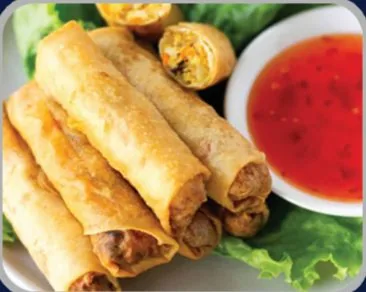
| Veg Spring Roll | $4.99 | 3 pcs, or an egg roll |
| Vegetable Ramen | $10.99 | Ask about the broth base |
| H1 Vegetable Hibachi | $10.99 | With rice and vegetables |
The awkward part of vegetarian Japanese food is not the menu, it is the stock. Dashi made from bonito turns up in broths and sauces that read as vegetable dishes. Four questions settle it.
Miso soup and many broths start with bonito. It is the single most common hidden ingredient.
Yum yum, eel sauce and some dressings contain fish or shellfish derivatives.
Edamame at $4.99, seaweed salad at $4.99 and the avocado or cucumber roll at $5.99.
Vegetable ramen is $10.99 and vegetable hibachi is $10.99.
Food-safety and sourcing statements on this page follow the guidance below. Texas food establishments are also required to operate under state retail food rules, and staff handling raw fish are certified food handlers under those rules.
Carrollton and the wider North Dallas area have more meat-free Japanese options than the menus sometimes let on — the trick is knowing what to ask for. Start with vegetable rolls and plant-based sides, and don't be shy about the broth question. We'd love to put a vegetable-forward spread together for you once we open.
Mizunoya — Japanese Kitchen
1025 W Hebron Pkwy #156, Carrollton, TX 75010
Open daily except Tuesday